
HIVE and the Olympic Mindset: Building a Movement, One Home at a Time

When we think about the Olympics, we think about athletes training for years for one defining moment. Behind every medal is a network of coaches, trainers, supporters, and entire communities working together toward a shared goal. According to Ryan Olsen, that same spirit is at the heart of HIVE.
For Ryan, middle housing isn’t just about buildings, it’s about people.
Before a shovel hits the ground, HIVE depends on a diverse network of innovators, supply chain partners, city officials, community development directors, and local leaders. Creating middle housing requires alignment across sectors that don’t typically collaborate. “It really starts at a very human level,” Ryan explains. “Before any dream is realized, it’s us working with a diverse group of individuals. That’s how we create community: one person at a time.”
Like Olympic training, the visible result is only possible because of countless unseen hours of coordination and commitment. And just like elite athletes, those involved need coaching, guidance, feedback, and encouragement along the way to move from potential to performance.

Ryan at December 5th HIVE Groundbreaking in Newberg, Oregon; Photo Credit: Miguel Higgins Moy
Innovation in construction is notoriously difficult. Financing for startups is limited. Developers and homeowners are cautious about untested products. Unlike Olympic athletes who train in private before stepping into the arena, HIVE is innovating in real time, and under scrutiny. The team must secure land use approvals by firm deadlines, complete subdivision development on schedule, ensure builders deliver quality homes on time, and launch a public-facing showcase that feels “magical,” not half-finished. “If we pull this off, it becomes a model,” Ryan says. The stakes are high, and the deadlines are non-negotiable. The project asks the city to participate in a pilot that, if successful, could reshape how housing is developed and replicated elsewhere. Without full municipal alignment, the timeline slips. And if delivery extends beyond 2026, confidence from partners and supporters could erode. “It’s pure alignment of the stars,” Ryan says. “If one star is out, this thing doesn’t work.”
To overcome that, the team had to reframe the initiative not as one organization’s vision, but as a shared community dream. That shift has sparked something unusual in real estate development: competitors collaborating, stakeholders taking shared ownership, and cross-sector alignment around a collective goal. Behind that shift is intentional communication and Ryan is quick to credit partner Kimberley and colleagues Nate Wildfire and Amy Snyder as communication coaches. Working with diverse stakeholders means speaking in many languages and styles. It takes consistency, humility, and a willingness to be coached as much as to coach.

HIVE (Housing Innovation Village Experience) render provided by Missing Middle Housing Fund
Host cities hope the Olympics leave a lasting legacy. HIVE is built with that same long-term ambition. At its core, HIVE is a grand experiment. Can innovation in policy, finance, workforce development, and construction converge to create a replicable model for middle housing? The pilot is happening in Newberg, Oregon where funding allows the team to test the model. But the vision is far bigger. Ryan imagines a future where HIVE-inspired projects launch every year, hundreds of cities adopt similar models, and innovation ecosystems support middle housing nationwide. “If we can say, ‘Look, we did it. It worked. Now let’s replicate it,’ that’s the long-term legacy,” he says.
Olympic victories are measured in fractions of a second. HIVE’s benchmarks are equally precise. Success unfolds in stages:
Can the subdivision be developed on schedule?
Can builders meet construction deadlines?
Can homes sell at price points sustainable for both the community and the builders?
Does the public find the showcase inspiring?
But the ultimate metric goes beyond timelines or sales. True success, Ryan says, will be replication. When innovators scale their products. When other cities adopt the model. When the ecosystem built through HIVE continues beyond this one project. In many ways, that is the clearest sign of effective coaching: when the system no longer depends on one individual, but continues to perform because people have grown into their roles.

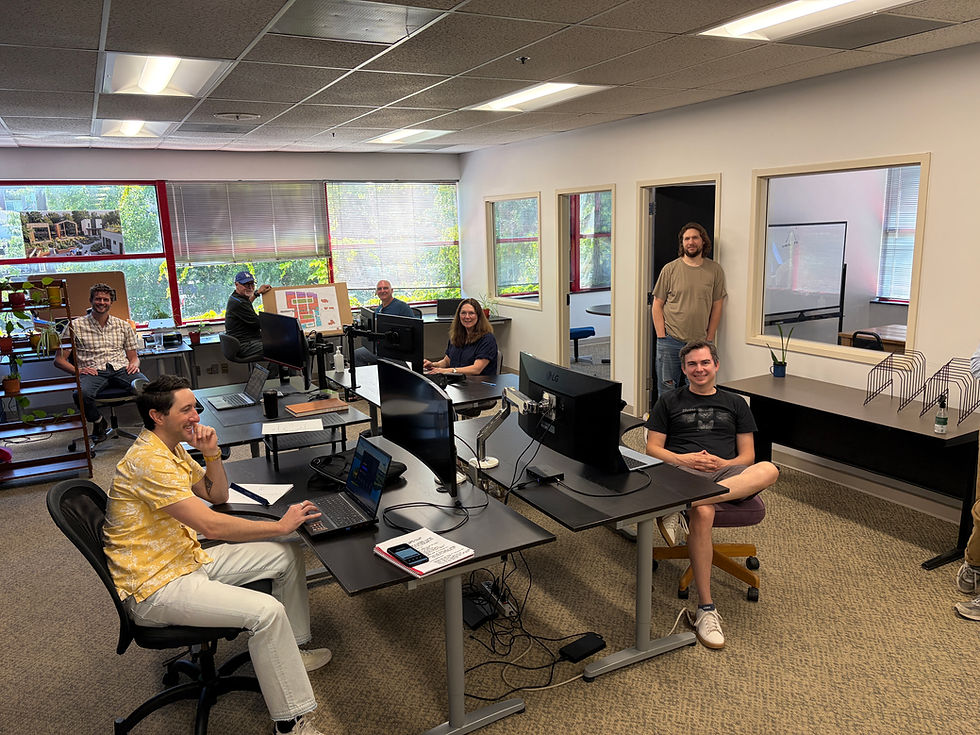
Photo Credit: Dominic Wunderlich
Ryan laughs when asked what Olympic sport HIVE would resemble. “It would be the most difficult sport ever to grace the Olympic stage,” he says. Imagine a 100-person bobsled traveling 200 miles per hour, filled with startups, builders, policymakers, competitors, and big personalities each with their own vision of how things should be done. Now imagine they must move in perfect coordination to reach the finish line. That’s HIVE. And perhaps the most encouraging sign? People who typically compete are choosing to collaborate. They’re staying in the same metaphorical bobsled, aligned around a shared conviction: that solving the missing middle housing challenge is necessary, and possible.


Comments